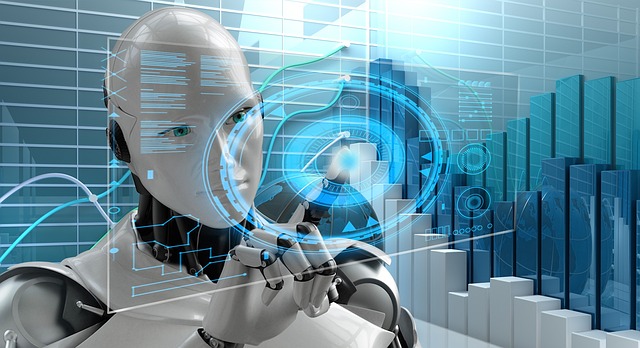






# Innovative Applications of AI Technology: Transforming Industries and Enhancing Everyday Experiences
Artificial Intelligence (AI) has transcended its initial conceptual frameworks to become a transformative force across various sectors. As technology continues to evolve, the innovative applications of AI are redefining operational efficiencies, enhancing customer experiences, and even reshaping entire industries. In this article, we will explore the diverse applications of AI technology, focusing on its impact in healthcare, finance, and daily life.
## Revolutionizing Healthcare with AI
The healthcare sector has witnessed a remarkable shift thanks to AI technology. From diagnosis to treatment, AI applications are streamlining processes and improving patient outcomes. One of the most notable advancements is the use of AI in medical imaging. Algorithms powered by machine learning can analyze images such as X-rays, MRIs, and CT scans with remarkable accuracy, often outperforming human radiologists. This capability not only accelerates the diagnostic process but also reduces the potential for human error, ultimately leading to better patient care.
In addition to imaging, AI is playing a pivotal role in predictive analytics. By analyzing vast datasets, AI can identify patterns that may indicate the onset of diseases. For instance, predictive algorithms can assess a patient’s genetic information, lifestyle choices, and medical history to forecast the likelihood of conditions like diabetes or heart disease. This proactive approach allows healthcare providers to implement preventive measures, thereby enhancing patient health and reducing long-term costs.
Moreover, AI-driven chatbots and virtual health assistants are revolutionizing patient engagement. These tools provide immediate responses to patient inquiries, schedule appointments, and even offer medication reminders. By automating routine tasks, healthcare professionals can focus more on direct patient care, further improving the overall healthcare experience.
## Transforming Finance through AI Innovation
The financial industry is another area where AI technology is making significant strides. Financial institutions are increasingly leveraging AI to enhance decision-making processes and mitigate risks. One prominent application is in fraud detection. Machine learning algorithms analyze transaction patterns in real time, identifying anomalies that may indicate fraudulent activity. This capability not only protects consumers but also saves financial institutions millions of dollars annually.
Risk assessment is another critical area benefiting from AI. Traditional methods often rely on historical data and human judgment, which can be subjective. However, AI models can analyze a broader range of data points, including social media activity and online behavior, to assess creditworthiness more accurately. This innovative approach enables lenders to make better-informed decisions, thereby expanding access to credit for individuals who may have been overlooked by conventional methods.
Investment strategies are also being redefined through AI. Algorithmic trading systems can analyze market trends and execute trades at lightning speed, capitalizing on fleeting opportunities that human traders may miss. Furthermore, robo-advisors utilize AI to provide personalized investment advice based on individual risk profiles and financial goals. As a result, both seasoned investors and novices can benefit from tailored financial strategies that were previously accessible only to a select few.
## Enhancing Everyday Experiences with AI
Beyond the realms of healthcare and finance, AI technology is increasingly integrated into our daily lives, enhancing experiences in ways that were once unimaginable. Smart home devices, powered by AI, can learn user preferences and automate tasks such as adjusting lighting, controlling thermostats, and managing home security systems. This level of personalization not only improves convenience but also contributes to energy efficiency, ultimately benefiting the environment.
In the realm of transportation, AI is driving innovations that enhance safety and efficiency. Autonomous vehicles, equipped with advanced AI algorithms, are being developed to navigate complex environments while minimizing the risk of accidents. Additionally, AI systems are optimizing traffic management in urban areas, reducing congestion and improving travel times. Such advancements promise to revolutionize how we commute, making transportation safer and more efficient.
Entertainment is another sector experiencing a significant transformation due to AI. Streaming platforms utilize sophisticated algorithms to analyze viewer preferences and recommend content tailored to individual tastes. This level of personalization keeps users engaged and encourages them to explore new genres, ultimately enhancing their overall experience. Furthermore, AI is being used in content creation, with tools that can generate music, art, and even scripts, pushing the boundaries of creativity.
## Conclusion: The Future of AI Technology
As we look to the future, the potential applications of AI technology appear limitless. Industries across the board are beginning to realize the benefits of integrating AI into their operations, leading to increased efficiency, reduced costs, and improved customer experiences. The transformative power of AI is not just confined to specific sectors; it permeates our daily lives, reshaping how we interact with the world around us.
While challenges remain, particularly concerning ethical considerations and data privacy, the ongoing advancements in AI technology offer exciting opportunities for innovation. As organizations continue to harness AI’s capabilities, we can expect to see even more groundbreaking applications that will further enhance industries and elevate everyday experiences. The journey of AI is just beginning, and its impact on society will undoubtedly be profound and far-reaching.